The Japanese Garden
Gourmet stay on Funen
Rent the entire hotel
Stay
Meetings and conferences
Hesselet – The Japanese Garden
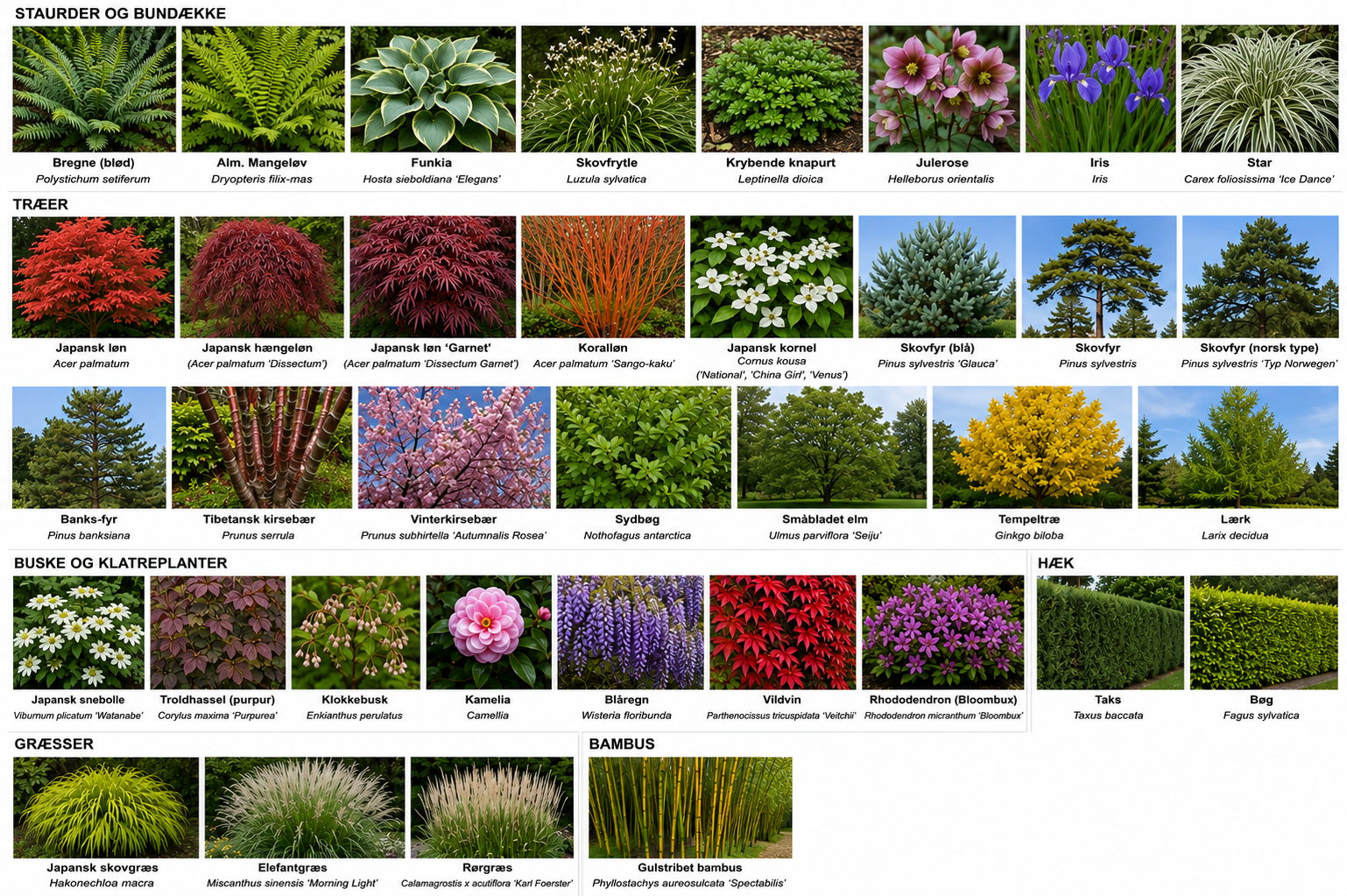
The Japanese garden at Hotel Hesselet is composed with respect for both the site and the spirit of the Japanese garden tradition.
The plants are selected to reflect the rhythm of the seasons, the tranquility of nature and the interaction between stone, water and wood.
The entrance – Gate (Mon)
The gate marks the transition from the outside world to the peaceful universe of the garden.
In Japanese culture, the gate, often inspired by the traditional torii, symbolizes a step into the spiritual – a place where one leaves behind hustle and bustle and worries and enters into peace and presence.
It reminds us that the garden is a place for contemplation, respect for nature and inner balance.
The crane and the turtle = The island in the parking lot
In the Japanese garden, the crane and the turtle symbolize harmony between heaven and earth – the light and the solid, the moving and the calm.
The crane represents happiness, grace and a long life. It is associated with elegance and spirituality and is often seen in the garden as a rock formation or an elongated island resembling a bird with outstretched wings.
The turtle stands for stability, calm and wisdom. It symbolizes the power of the earth and eternity and is typically designed as a low, round island with a small stone as its head. Often the crane and the turtle are placed opposite each other in the water, creating a peaceful interplay between heaven and earth.
Together, the two figures express balance, peace and the eternal cycle of nature – a central theme in Japanese garden tradition and in our own gardens, where they remind us to create peace, beauty and harmony in everything we do.
The turtle in Hesselet's garden faces Restaurant Hi – like a guardian of the place.
Its shield rests heavy and calm, covered in moss and low pine, and looks out towards the house as a symbol of protection, strength and tranquility.
In Japanese philosophy, the turtle guards against misfortune and brings wisdom and stability to the place it protects.
Japanese Maple on Stone
In the garden stands this special work of art – created locally by the blacksmith Jesper – as an interpretation of the Japanese bonsai tradition.
The tree is made of iron and copper and depicts a Japanese maple growing directly from the stone. The combination of raw materials and organic form symbolizes the strength, tranquility and balance of nature – values that are central to Japanese garden art.
In the art of bonsai, the tree is shaped with great patience and respect for nature's expression. Here, the idea is translated into a modern work of art, where the metal gives the tree eternal life, while the living surface of the copper will patina over time and change character along with the garden around it.
The stone represents stability and grounding, while the maple symbolizes beauty, the changing seasons, and the transience of life. Together, they create a quiet spot for reflection and presence in the garden.
Tsukubai – The Water Stone
Tsukubai means “to bow down” and is one of the most symbolic elements of a Japanese garden. It is traditionally used as a place for ritual purification – not of the body, but of the mind. Its low height invites one to bow down, as a sign of humility, respect and presence, before entering a quiet or particularly significant space.
The water stone consists of a carved bowl in natural stone, where water flows calmly from a bamboo tube – kakei – and collects in the shallow depression. The water moves constantly, but without haste, symbolizing the flow of life and eternal renewal. Around the bowl there is moss, small stones and low planting, which emphasizes the simplicity and creates a quiet, green frame around the element.
Tsukubai is a place of reflection and respect – a moment to stop, breathe and let go of everyday thoughts. In Japanese tradition, a small bamboo clasp (hishaku) is used to symbolically rinse the hands and mouth. At Hesselet, the ritual is more of a thought than an action – a reminder that you are entering a place where calm and balance are at the center.
The sound of trickling water is an important part of the experience. It dampens noise, creates rhythm and reminds us that stillness can also be movement. The water not only cleanses physically, but creates clarity – a small moment of “now”.
Tsukubai symbolizes respect for the place and peace of mind. It is a place to stop, breathe, and let your thoughts settle before moving further through the garden.
The stream – the flow of life
Water is the lifeblood of the garden – a symbol of movement, change and the eternal flow of time. It binds the garden together and creates rhythm, like the pulse of a living being. The water moves softly through the landscape, always in balance between power and calm.
A trickling stream adds sound, life and energy. In Japanese tradition, it is said to carry ki – life energy – which flows through the garden and gives it vitality. The gentle movement and gurgling sound affect the senses and make the pace slow down, so that you almost unconsciously begin to breathe more calmly.
The path of water through the garden also symbolizes the journey of life – from source to sea, from beginning to end, in an endless circle of renewal. It reminds us that everything in nature is in constant motion, yet still in harmony.
At Hotel Hesselet, the watercourse is placed as a central element, connecting the parts of the garden and leading the eye calmly onward. The water reflects the light, the plants and the sky – and invites the guest to stop, listen and feel the calm.
Sand Garden – The Pacific Ocean (Karesansui)
The sand garden is the heart of the Japanese contemplative garden. Here, sand and stone replace water and movement, and the forces of nature are displayed in their simplest form. The word karesansui literally means “dry landscape,” and the garden is known from Zen Buddhist monasteries, where it is used for meditation and contemplation.
In the sand garden, the cracked sand symbolizes the waves of the sea, while the solid stones represent islands, mountains or rocks that stand still in the midst of movement. The pattern in the sand is created with a rake, and the lines create rhythm and balance – like the movement of the wind over the water. They constantly change according to the season, mood and state of mind, and each time a new expression emerges in the language of silence.
The sand garden is not about perfection, but about presence. It teaches us that calm does not mean the absence of movement, but harmony between that which moves and that which stands still. When you look at the grooved patterns, you can almost feel your thoughts calm down – as if your mind is following the lines of the sand.
In Japanese philosophy, the sand garden also represents the void – “ma” – the space between things where silence resides. The void is just as important as the stones, as it provides space for reflection, air and balance.
At Hesselet, the sand garden is positioned as a place for contemplation and silence, where guests can rest their eyes and find peace of mind. The combination of sand, stone and light shows the rhythm of nature in its most simple and beautiful form.
Paths, granite paving and Ichimatsu – The path through the garden
The paths in the Japanese garden represent the journey of life – a movement through time, thoughts and nature. Each stone is placed with care, and no two are exactly alike. The deliberately uneven rhythm makes us slow down and be aware of each step. In Japanese tradition, this is a way of reminding us that beauty and tranquility are found in slowness and in imperfection.
The granite paving symbolizes strength, durability and balance. The solid stones provide calm and stability amidst the garden’s living elements such as water and plants. As you walk along the path, you feel the slight resistance underfoot – a reminder that calm requires awareness and presence.
In parts of the garden, the path's structure is repeated in the classic Ichimatsu pattern – alternating light and dark fields that symbolize harmony, order and rhythm. The pattern, known from Japanese textiles and architecture, creates a quiet play between light and shadow, man and nature.
Together, the paths, granite and Ichimatsu pattern create a visual and sensory story of balance. They connect the elements of the garden and show that contrasts – such as soft and hard, light and dark, movement and calm – together create wholeness.
The Bridges – Transitions and Movement
The bridges in the Japanese garden symbolize the transition from one state to another – from everyday life to tranquility, from thought to emotion, from man to nature. When you step onto the bridge, you move not only physically, but also mentally. It is a moment of change, where you leave the old behind and open yourself to the new.
In Japanese tradition, bridges are often slightly curved or sloping. The shape forces the body to adjust its balance and reminds us that calm is not stillness, but conscious movement. The curved shape also has a symbolic meaning – it represents the rhythm of life and the cycle of nature.
There is an old superstition that the devil cannot walk around corners. That is why paths and bridges in Japanese gardens are rarely perfectly straight. When you move along a winding path or over an arched bridge, you “walk away from the devil” – you cleanse your mind and leave behind everything heavy or negative before reaching the garden on the other side.
The bridges thus create a turning point in the garden’s narrative. They connect not just two sides of the water, but two worlds – the outer and the inner, the busy and the quiet. The sound of water underfoot and the changing perspective as you walk across the bridge awaken a quiet awareness of nature’s movement and our own.
At Hotel Hesselet, the bridges lead guests calmly through the garden and provide an opportunity to stop in the middle of the movement – a momentary pause between two worlds.
The pergola and the wisteria (Fuji)
Wisteria – Fuji in Japanese – is a classic and much-loved plant in Japanese gardening. Its winding branches and drooping flower clusters symbolize love, humility, devotion and perseverance. When it blooms, nature unfolds with a grace that is both magnificent and fragile – an image of the beauty and transience of life.
As the wisteria winds its way up the pergola, it creates a living, fragrant roof, where light and shade are filtered through the flowers and leaves. It creates a space of calm and poetry – a place where time seems to slow down. In Japanese tradition, it is a place of reflection, love and togetherness.
The pergola at Hesselet is more than a beautiful garden feature – it becomes part of the guest’s journey and experience when visiting Restaurant Hi. Guests are picked up at the reception and guided up the path to the pergola, where they are greeted by the fragrant wisteria and a moment of silence under its flowering roof. Here, a small refreshment or appetizer is served while they are introduced to the evening.
It is a moment to arrive – physically, mentally and sensibly. The light, the scent and the sound of water from the garden around the pergola create an atmosphere of anticipation and tranquility. The transition through the pergola marks the entry into a new experience – from the world of everyday life to an evening in harmony with nature, food and human presence.
In Japanese philosophy, the wisteria is considered a symbol of gratitude and respect – its long tendrils bend towards the ground as if honoring what is around it. At Hesselet, it thus becomes a natural symbol of the hospitality and warmth on which the house is built.
You will find it in the Japanese Garden.